

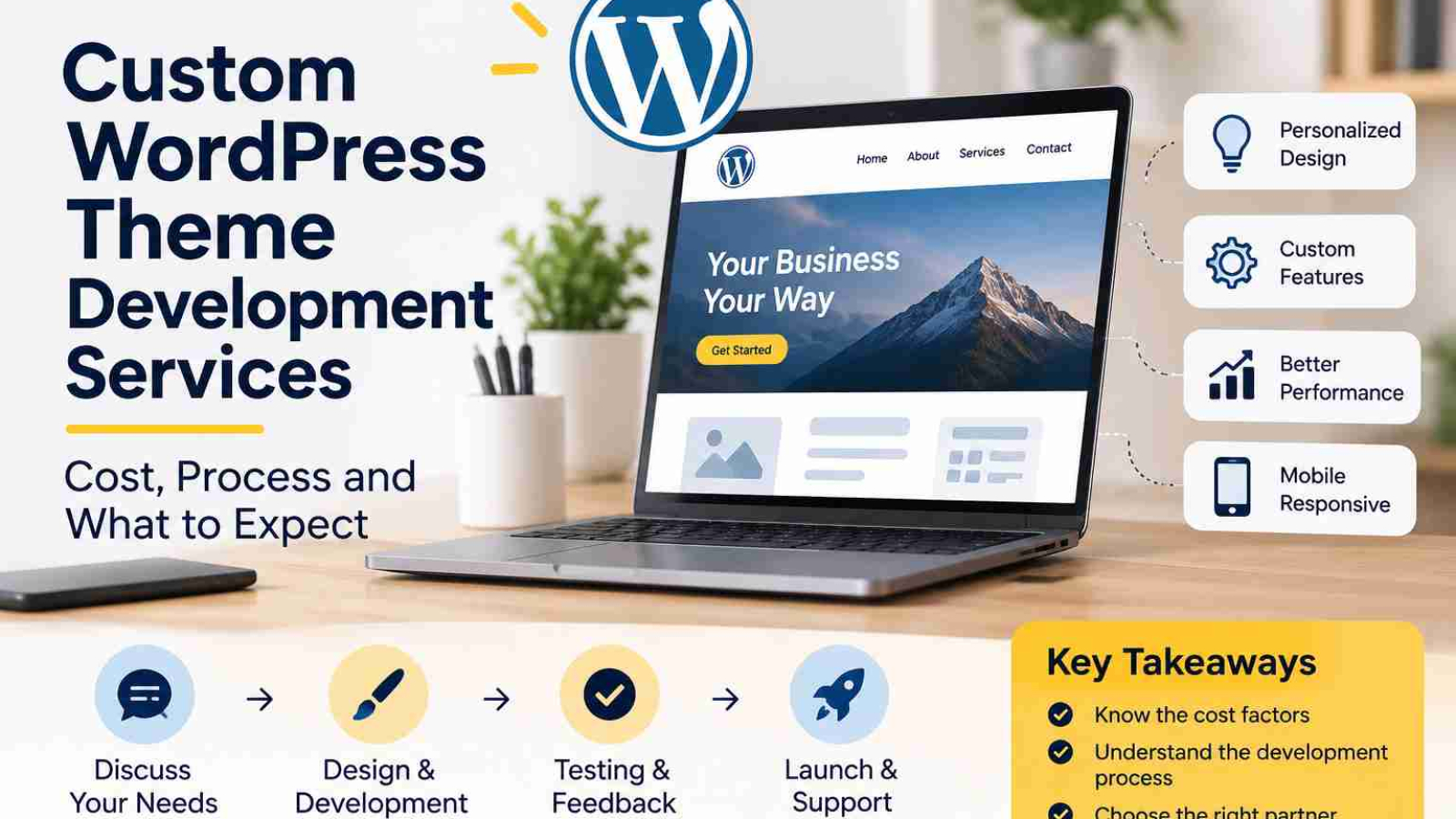
A ready-made theme gets you online quickly, but it also gets you the same layout hundreds of other sites are using. Custom WordPress theme development services build the design and code around your business instead. That means faster pages, cleaner code and layouts that match how your customers actually browse. This guide explains what you’re paying for, what it costs, how the process works and how to hire the right team.
What Is a Custom WordPress Theme?
A custom theme is coded specifically for your site rather than adapted from a marketplace template. The designer plans layouts around your content and goals, and the developer builds only the features you need, instead of loading a bulky theme packed with options you’ll never touch. WordPress uses themes to control how a site looks and behaves, which is why the quality of the theme matters for speed and usability.
Custom Theme or Premium Theme?
Premium themes typically cost between $30 and $100 and are a good fit when your needs are standard. A custom build starts to make sense when:
- Your brand needs a distinctive layout that templates can’t deliver.
- You have unusual content types, such as listings, courses or product configurators.
- Page speed and clean code are priorities.
- You’ve outgrown a template and keep hacking around its limits.
If your site is a simple brochure with a handful of pages, a well-chosen premium theme plus good content may be the smarter spend.
What Custom WordPress Theme Development Services Include
- Discovery: goals, audience, content structure and functionality requirements.
- Design: wireframes and visual mockups for key page templates.
- Development: coding the theme with responsive layouts, templates and any custom post types.
- Plugin setup: installing and configuring only the plugins you need.
- Testing: cross-browser, mobile and performance checks.
- Handover: documentation and training so your team can update content.
Hosting, emergency support and ongoing maintenance are usually not included in a theme build, so ask about them separately.
How Much Does It Cost?
Cost depends on design complexity, the number of unique page templates and the features you need. Published guides give widely different ranges, which tells you quotes depend heavily on who builds it and how complex the project is:
Option | Typical range (as reported in 2026 guides) |
|---|---|
Premium theme | $30 to $100 |
Freelancer custom work | Roughly $500 to $5,000 |
Standard custom theme | Often $5,000 to $15,000+ |
Complex theme with unique functionality | Can exceed $25,000 |
These numbers come from US and UK sources. Rates in other markets, including India, can be lower, but the same rule applies: price follows scope. Ongoing maintenance may add a few thousand dollars per year for larger sites, according to some agencies.
The Development Process and Timeline
Phase | What happens |
|---|---|
1. Discovery | Requirements, sitemap, content inventory |
2. Design | Wireframes and mockups approved by you |
3. Development | Theme coding, templates, integrations |
4. Testing | Devices, browsers, speed, accessibility |
5. Launch | Content migration, redirects, go-live checks |
6. Support | Bug fixes and optional maintenance |
Timelines scale with scope. Some agencies point out that a full custom theme quoted in only a few weeks usually relies on a starter template or trims testing, so treat unusually short timelines with caution.
Hidden Costs to Plan For
- Scope changes: mid-project revisions can raise the price significantly.
- Content creation: copy, photos and videos are often separate work.
- Premium plugins and licenses: annual fees for forms, SEO or ecommerce add-ons.
- Hosting and security: ongoing monthly or yearly costs.
- Maintenance: updates for WordPress, plugins and compatibility.
How to Choose a Development Partner
Look past the portfolio’s visuals. Ask the questions that reveal quality:
- Do you code themes from scratch, or customize a starter framework?
- Who owns the code and design files after delivery?
- How do you handle page speed and mobile performance?
- What does the fixed scope include, and how are changes priced?
- What happens after launch? Is there a support or warranty period?
Red flags include no written scope, vague timelines, no testing phase and reluctance to explain who owns the final code. Also check that SEO fundamentals, such as clean heading structure and fast loading, are built in from day one. Our SEO team often works alongside developers for this reason.
If you’re in Pune or working with an Indian team, our website development and website design pages explain how we approach builds.
Key Takeaways
- Choose custom when you need unique layouts, special content types or top performance.
- Budgets range widely, so request a written scope before comparing quotes.
- Plan for hosting, plugins and maintenance beyond the build price.
- Confirm code ownership and post-launch support in writing.
Planning a new site? Contact Growthy for a scoped quote.
FREQUENTLY ASKED QUESTIONS
Published guides show anything from a few hundred dollars for simple freelance work to well over $25,000 for complex builds. Scope drives the price.
It depends on the number of templates and features. Expect longer than a template setup, since design, development and testing are separate phases.
A child theme modifies an existing parent theme. A custom theme is built from scratch for your site.
It should be agreed in your contract. Ask for ownership of the final theme files.
If the site drives leads or sales and a template limits you, yes. For a basic brochure site, a premium theme may be enough.
Add a Comment