

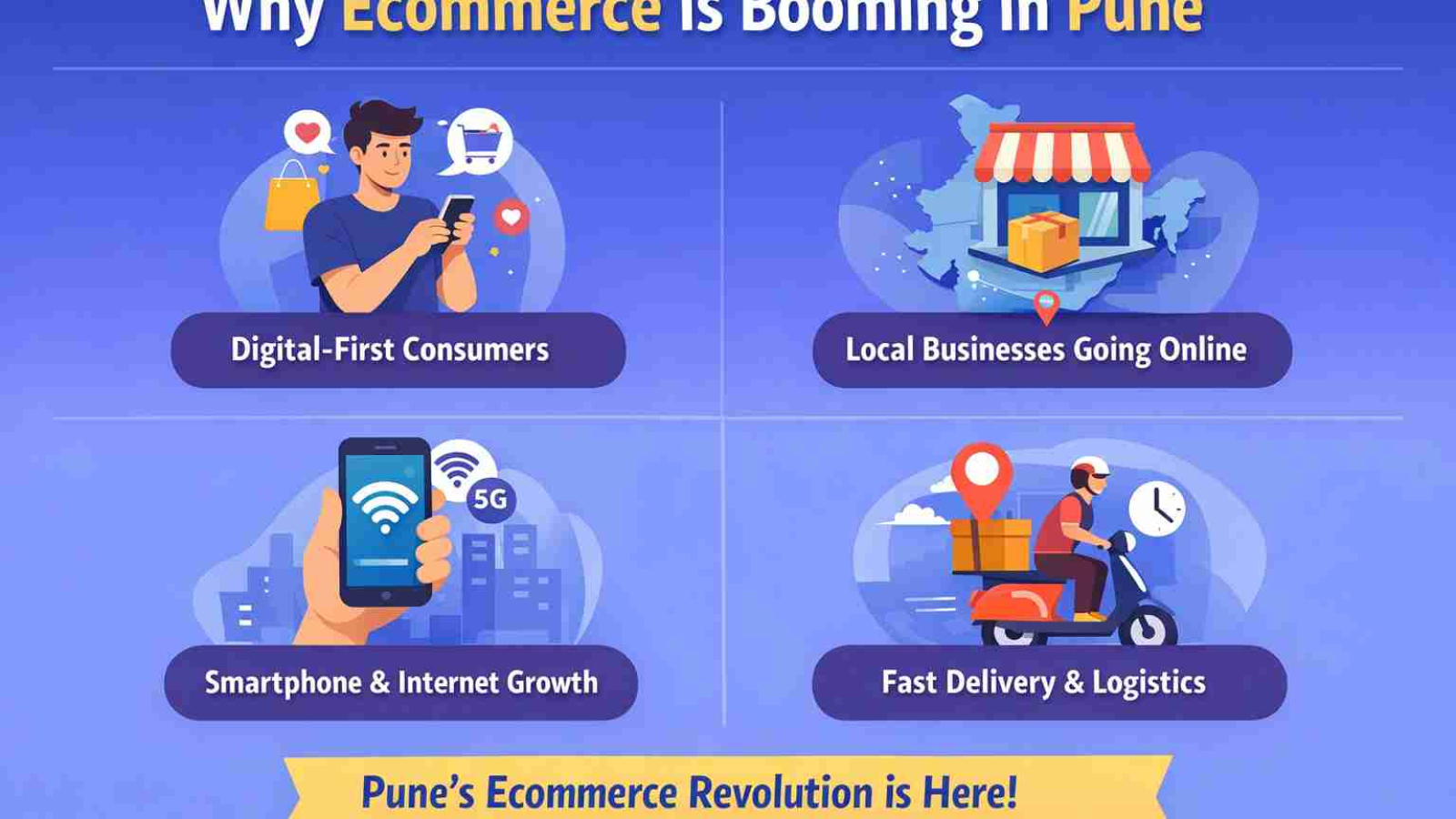
If you’re running a business in Pune right now, chances are you’ve already thought about selling online—or at least felt the pressure to.
Maybe competitors have launched their websites. Maybe customers keep asking, “Do you have an online store?” Or maybe your offline sales have just plateaued.
Whatever the trigger is, one thing is clear: ecommerce is no longer optional.
But here’s the problem—most business owners jump into ecommerce without really understanding what goes into it. They either overspend on things they don’t need or worse, build something that looks good but doesn’t sell.
So instead of giving you another “perfect” guide, let’s break this down the way it actually works on the ground—especially when it comes to ecommerce website development in Pune.
Why More Pune Businesses Are Going Online (And Why It Matters)
A few years ago, ecommerce was mostly dominated by big players. Today, that’s changed.
Walk into any local market in Pune—furniture stores, clothing brands, even niche businesses—and you’ll notice something: they’re all trying to build an online presence.
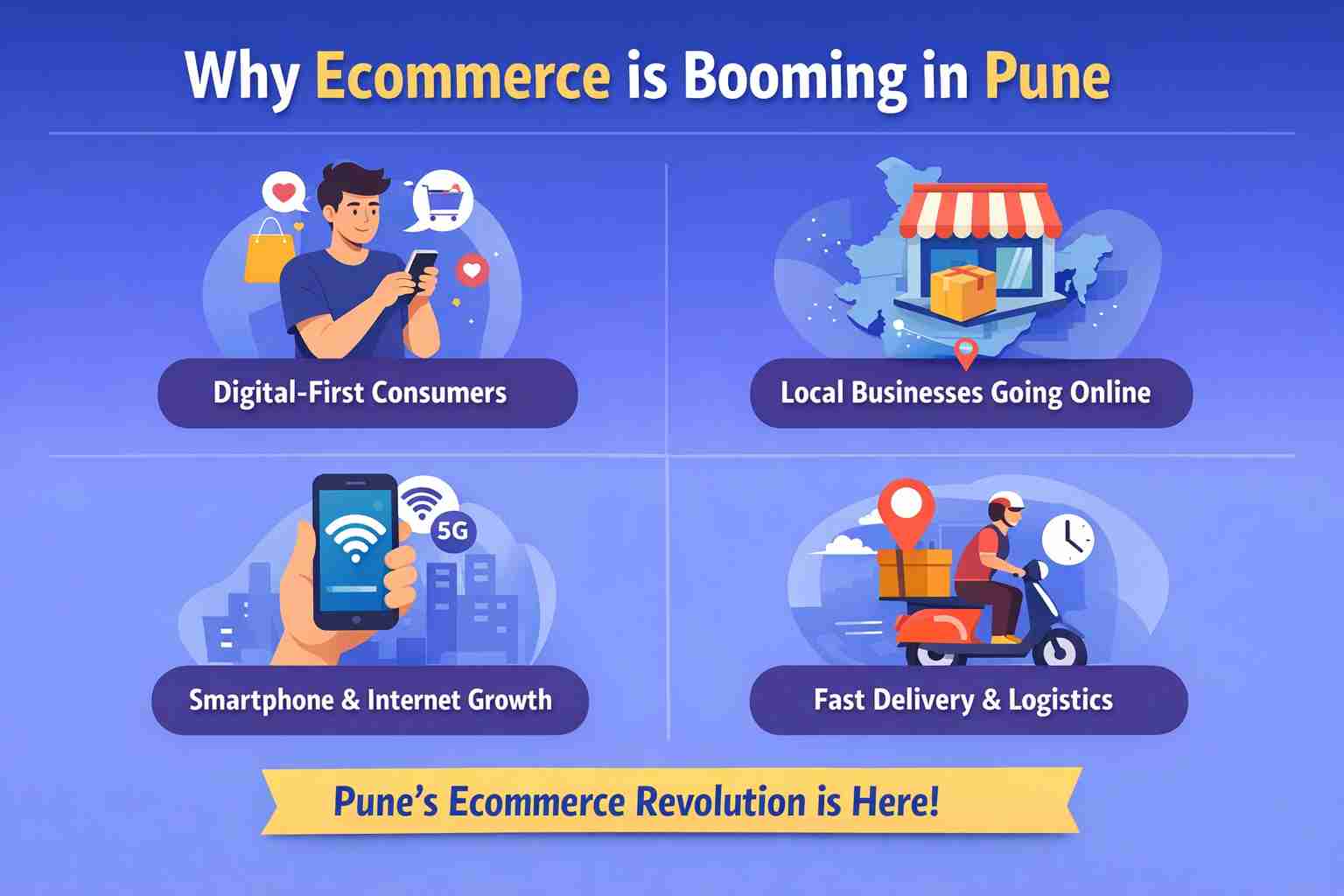
Why?
Because customer behavior has changed. People don’t “go shopping” the way they used to. They browse on Instagram, compare prices on Google, and expect to order within minutes.
And if your business isn’t there at that exact moment, you’re invisible.
What’s interesting about Pune specifically is the mix of audiences:
- Young professionals with high spending power
- Students who are digitally active
- Families looking for convenience
That combination makes it a strong ecommerce market—but also a competitive one.
What Ecommerce Website Development Actually Means (Beyond Just “Making a Website”)
A lot of people think ecommerce development is just about putting products online.
It’s not.
A proper ecommerce website is more like a system:
- Your product catalogue
- Payment processing
- Inventory tracking
- Order management
- Customer experience
All of these need to work together smoothly.
And here’s where most businesses go wrong—they focus too much on design and ignore usability.
A good ecommerce website isn’t just “nice-looking.” It should make it ridiculously easy for someone to:
- Find what they want
- Trust your brand
- Complete the purchase
If any one of these breaks, your sales drop.
Choosing the Right Type of Ecommerce Setup
Not every business needs the same kind of website.
For example, if you’re selling directly to customers—say furniture, decor, or clothing—you’re looking at a typical B2C model.
But if you’re dealing with bulk orders or distributors, your website structure will be very different.
Then there’s D2C (direct-to-consumer), which a lot of Pune brands are moving towards now. This gives you better margins and control, but it also means you’re responsible for marketing.
Some businesses even explore multi-vendor setups—but unless you’re building something large-scale, that’s usually overkill.
The point is: don’t copy what others are doing blindly. Your website should match your business model.
Platforms: What Actually Works (Not Just What’s Popular)
This is where most confusion happens.
Everyone will recommend something different—Shopify, WooCommerce, custom builds—and honestly, they’re all right… in different situations.
If you want something quick, reliable, and low-maintenance, Shopify works well. It’s especially useful if you don’t want to deal with technical issues.
WooCommerce gives you more flexibility, but it also needs better handling—hosting, plugins, updates.
Custom-built websites? They make sense only if you have very specific requirements or long-term scalability plans.
Here’s the honest take:
Don’t choose a platform based on trends. Choose it based on how you plan to run your business daily.
Features That Actually Impact Sales (Not Just “Nice to Have”)
You’ll often see long feature lists when agencies pitch ecommerce websites.
But in reality, only a few things truly move the needle.
- Website speed – If it loads slowly, users leave. Simple.
- Mobile experience – Most of your traffic will come from phones
- Checkout flow – Complicated = abandoned carts
- Product pages – Clear images, pricing, and trust signals
One underrated factor? Clarity.
If a customer has to “figure out” your website, you’ve already lost them.
Let’s Talk About Cost (What People Don’t Tell You)
This is usually the first question—and also the most misunderstood one.
Yes, you can build a basic ecommerce website for ₹20,000–₹30,000.
But will it perform? That’s a different story.
Most serious businesses in Pune end up spending somewhere between ₹50,000 to ₹1.5L for something that actually works well.
And if you’re going custom or scaling aggressively, costs go higher.
But here’s the real thing people don’t say:
👉 The website is not your biggest cost—getting traffic and conversions is.
So instead of just asking “What’s the cheapest option?”, ask:
“Will this setup help me generate sales?”
Choosing the Right Development Partner (This Matters More Than Platform)
You can pick the best platform in the world—and still fail if the execution is poor.
When you’re evaluating an agency or developer, don’t just look at their design work.
Ask:
- Have they worked with ecommerce businesses before?
- Do they understand SEO and performance marketing?
- Will they support you after launch?
A lot of developers build and disappear. That’s a problem.
You want someone who understands that ecommerce is not a one-time project—it’s an ongoing growth process.
Marketing: The Part Most Businesses Underestimate
Launching your website is just step one.
Without marketing, it’s like opening a store in the middle of nowhere.
You’ll need:
- SEO (for long-term traffic)
- Paid ads (for immediate visibility)
- Retargeting (to recover lost visitors)
- WhatsApp/email (for repeat customers)
In Pune’s competitive market, relying on just one channel rarely works.
The businesses that succeed are the ones that combine multiple strategies.
Common Mistakes (Seen Way Too Often)
If there’s one thing you should take away from this guide, it’s this section.
Some mistakes are surprisingly common:
- Building a website without SEO planning
- Ignoring mobile experience
- Using poor-quality product images
- Overcomplicating the checkout
- Expecting instant results without marketing
None of these are “technical” issues—but they impact revenue directly.
What’s Changing in 2026 (And Why You Should Care)
Ecommerce is evolving fast.
We’re already seeing:
- More personalized shopping experiences
- Faster delivery expectations
- Better payment systems
- Integration with social media platforms
Customers are becoming less patient and more selective.
That means your website needs to be faster, clearer, and more trustworthy than ever before.
Final Thoughts
If you’ve made it this far, you probably already know—this isn’t just about building a website.
It’s about building a system that brings in customers, converts them, and keeps them coming back.
And that’s exactly why ecommerce website development in Pune is growing so fast—because businesses are starting to see the bigger picture.
If you’re planning to invest in ecommerce, take your time with the basics:
- Choose the right setup
- Focus on user experience
- Don’t ignore marketing
Get these right, and your website won’t just exist—it’ll actually perform.
Add a Comment