

Most businesses don’t fail because they lack skill, effort, or intent. They fail because, to the outside world, they look like everyone else.
I see this constantly. Capable teams. Solid offerings. Decent traction. And yet, growth stalls. Not because the company is weak, but because the brand is unclear.
The mistake usually starts early. A business gets registered. A name is chosen. A website goes live. From that moment on, the assumption is that branding is “done” — or at least something that can wait.
It can’t.
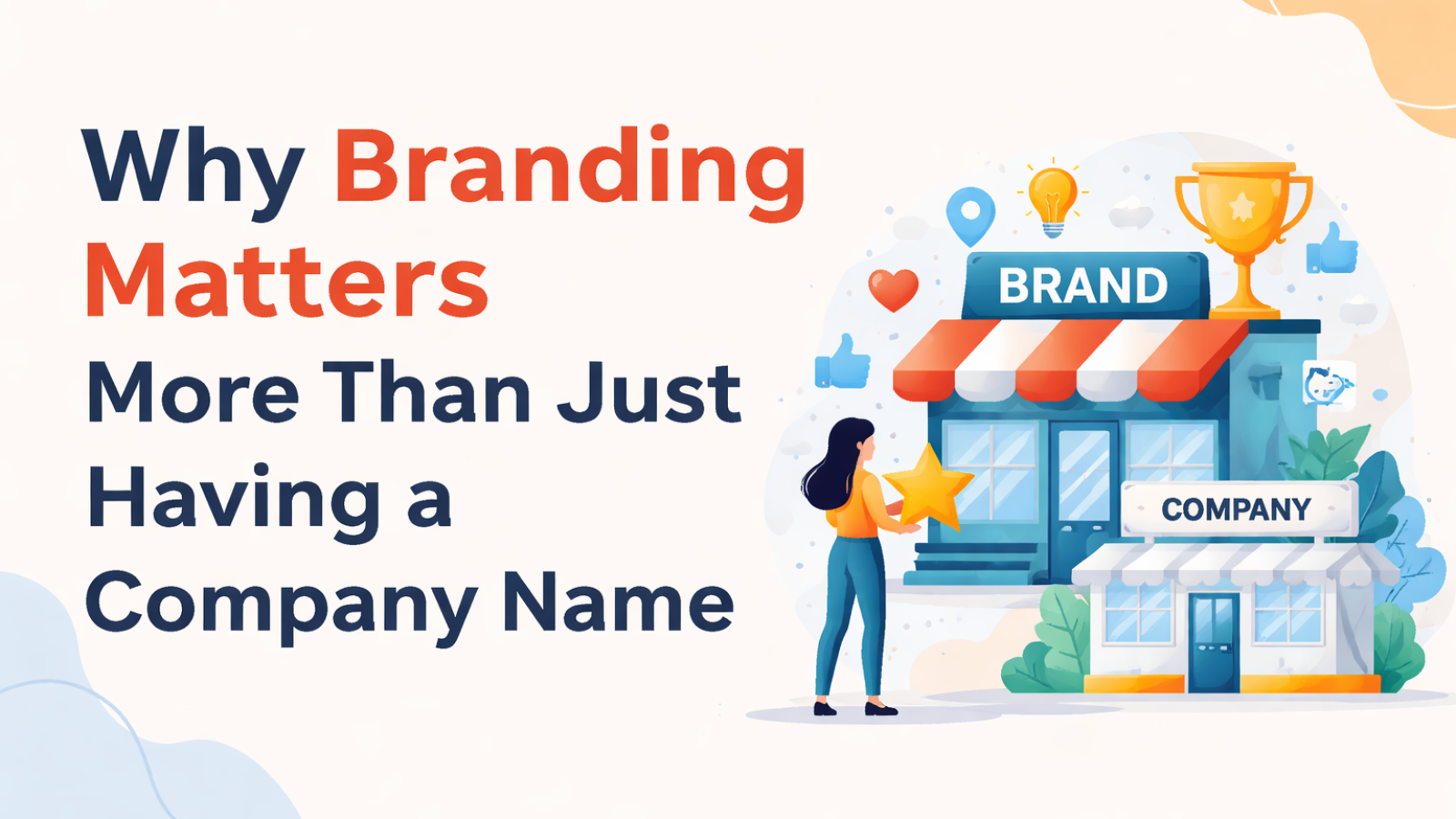
Because what you’ve built at that point is a company, not a brand. And understanding the difference between brand and company is where growth either accelerates or quietly plateaus.
A company exists on paper. A brand exists in people’s heads.
This distinction sounds obvious until you see how often it’s ignored.
A company is functional. It allows you to operate. To hire. To invoice. To comply. It is necessary, but it is invisible to emotion.
A brand is not something you register. It is something that forms whether you like it or not. Every interaction, every piece of content, every inconsistency contributes to it.
You can control your company completely.
You can only influence your brand.
That gap is where most businesses struggle — because they try to manage perception the same way they manage operations. It doesn’t work.
Why a company name feels like progress — but rarely creates traction
Choosing a company name feels productive. It’s a milestone. Something tangible.
But a name alone doesn’t tell anyone why they should care.
It doesn’t explain:
- What you stand for
- Who you are really built for
- What problem you solve better than others
- What experience someone should expect
Branding does that work. Quietly. Repeatedly. Over time.
Without branding, your company name is just a label competing for attention in an already crowded market.
The market doesn’t reward competence — it rewards clarity
This is one of the hardest truths for founders to accept.
Being good is not enough.
I’ve seen businesses with excellent delivery struggle simply because they were unclear in how they positioned themselves. From the outside, they sounded generic. Safe. Interchangeable.
When prospects can’t immediately tell why you’re different, they default to comparison. And comparison almost always leads to price pressure.
This is where the difference between brand and company becomes painfully real. Companies explain what they do. Brands make it obvious why it matters.
Branding builds trust before you ever speak to a customer
Most trust is formed before a conversation begins.
Your website, your content, your tone — they all answer questions silently:
- Do these people know what they’re doing?
- Are they confident or uncertain?
- Will working with them be smooth or painful?
- Can I rely on them?
Strong branding answers these questions without trying too hard. Weak branding leaves doubt.
And doubt kills momentum.
This is why two businesses offering the same service can have vastly different conversion rates. One feels reliable. The other feels like a risk.
Recognition is not visibility — branding creates memory
Many companies focus on being seen. Fewer focus on being remembered.
You can run ads, publish content, and increase reach — but if branding is weak, nothing sticks. The audience scrolls past and forgets.
Branding creates recall. It makes your business familiar before it becomes popular.
Familiarity builds comfort. Comfort builds preference.
That chain reaction doesn’t happen by accident. It happens by design.
Brands don’t compete on price — they compete on confidence
One of the clearest outcomes of strong branding is pricing power.
When customers trust a brand, they stop negotiating so aggressively. They stop comparing line by line. They assume competence.
Unbranded companies spend time defending their price. Branded businesses spend time delivering value.
This has nothing to do with arrogance and everything to do with positioning.
Branding solves internal problems most companies don’t expect
Branding isn’t just outward-facing. It brings internal clarity.
When branding is clear:
- Teams communicate consistently
- Decisions align faster
- Messaging doesn’t change with every hire
- Culture feels intentional, not forced
Without branding, everyone has a slightly different interpretation of what the company stands for. That inconsistency leaks into customer experience.
A company can operate with confusion. A brand cannot scale with it.
Digital marketing exposes weak branding immediately
In today’s landscape, branding is visible everywhere — especially online.
Your website, SEO content, LinkedIn presence, ads — they all project identity. If that identity is unclear, digital marketing magnifies the problem.
Traffic without trust doesn’t convert.
This is why performance marketing without branding often plateaus. You can buy attention, but you can’t buy belief.
Belief is built through consistency, perspective, and clarity.
The most common branding mistake businesses make
They treat branding as decoration.
Logos, colours, and visuals matter — but they come after positioning. Without clarity, design only makes confusion look better.
Branding starts with:
- Point of view
- Market understanding
- Strategic differentiation
- Consistent expression
This is the strategic side of the difference between brand and company that most businesses miss.
How Growthy looks at branding
At Growthy, branding is not treated as a creative deliverable. It’s treated as a growth system.
The goal isn’t to look impressive. It’s to be chosen more easily.
Branding here connects directly to:
- Market positioning
- Content strategy
- SEO authority
- Conversion optimisation
When branding is aligned with growth, marketing stops feeling like effort and starts feeling like leverage.
Final thought
A company allows you to operate.
A brand allows you to matter.
That is the real difference between brand and company.
If you want short-term execution, a company is enough.
If you want trust, recognition, and long-term growth, branding is unavoidable.
The market doesn’t reward effort. It rewards clarity.
Add a Comment