
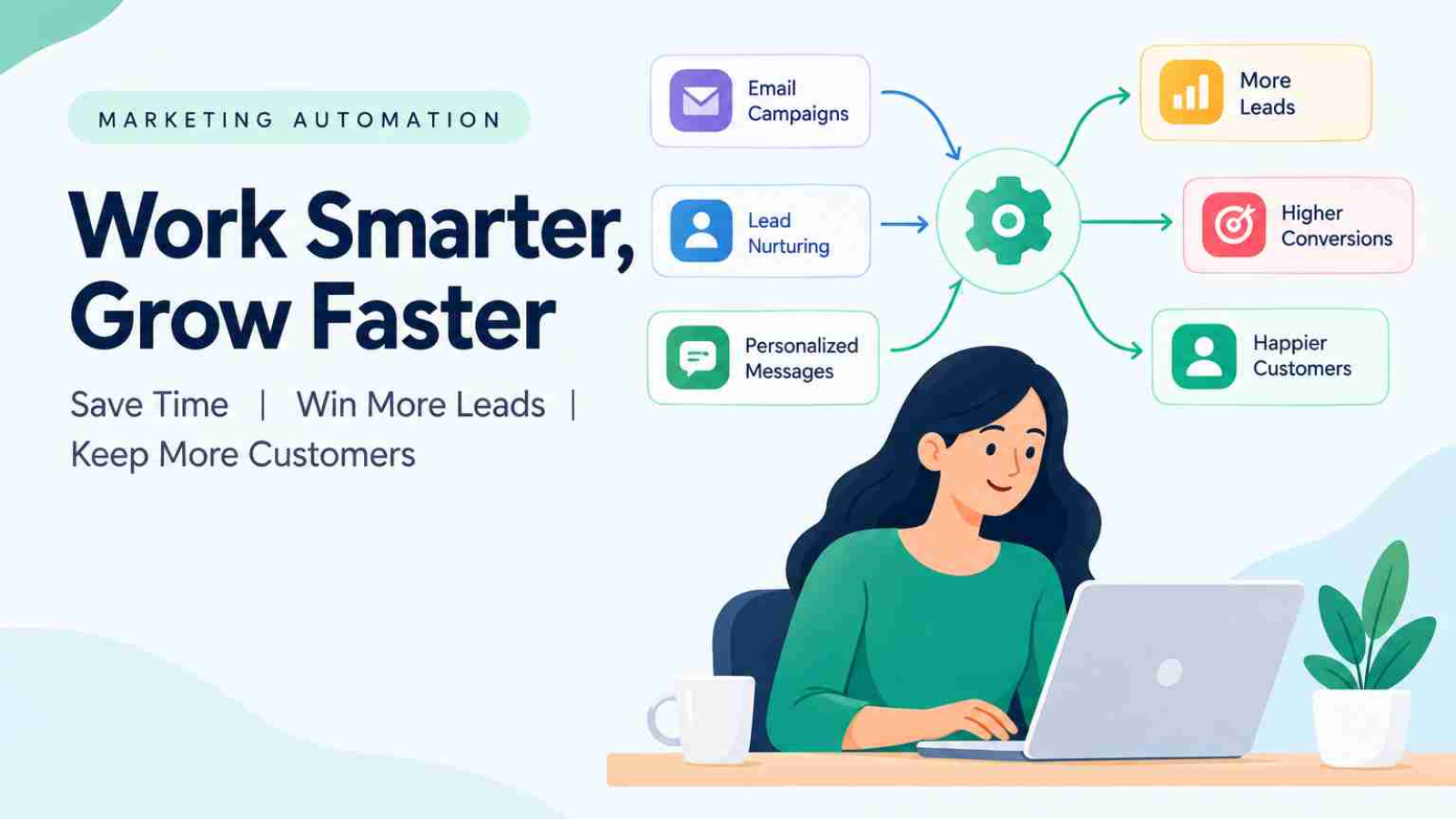
Most marketing teams don’t have an ideas problem. They have a follow-up problem. Someone downloads a guide on Monday, nobody emails them until Thursday, and by then they’ve forgotten who you are.
Marketing automation closes that gap.
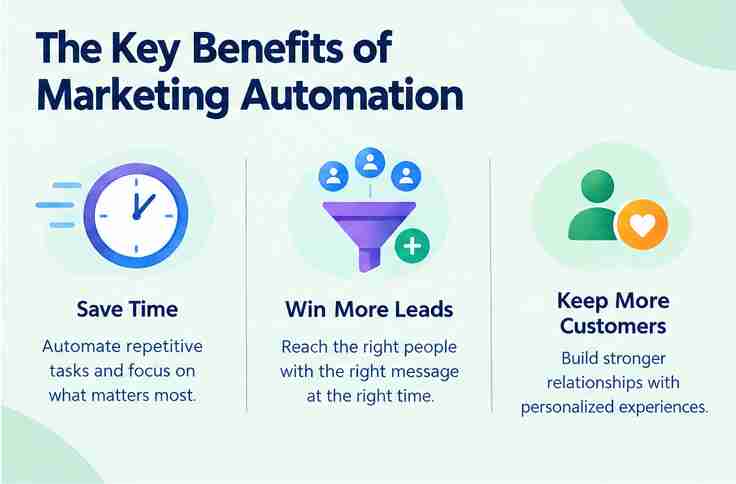
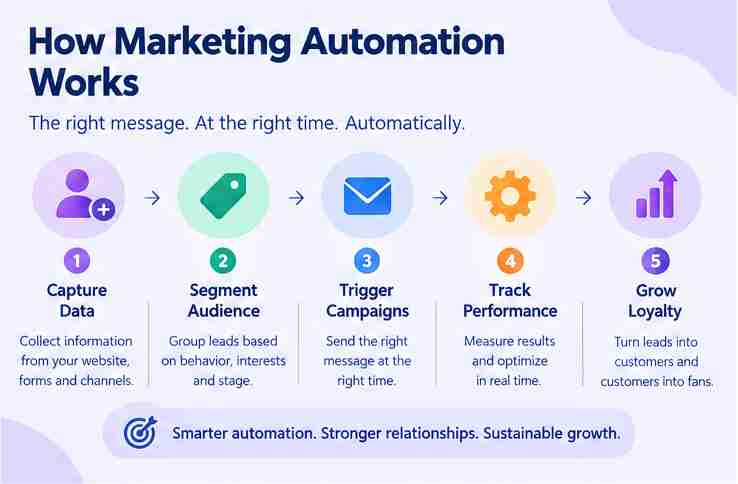
Quick answer: The main benefits of marketing automation are time savings, better lead nurturing, personalised messaging at scale, higher conversion rates, stronger customer retention and clearer reporting. It works by running repeat tasks like emails, follow-ups and segmentation automatically, based on what people actually do.
What is marketing automation?
Marketing automation is software that handles repetitive marketing work for you. You set the rules once. The system then sends the right message to the right person at the right time.
A simple example: a visitor reads three pricing pages, then opens your email. The system tags them as interested, sends a case study the next day and alerts your sales rep. Nobody on your team had to remember any of it.
It usually sits on top of a CRM, so every action gets tied to a real contact record.
Benefits at a glance
Benefit | What changes | Who feels it most |
Time savings | Fewer manual sends, reports and list updates | Small marketing teams |
Better lead nurturing | Leads get follow-ups within minutes, not days | Sales teams |
Personalisation | Messages match behaviour, not just first name | Ecommerce, SaaS |
Higher conversion | Right offer at the right moment | Growth and revenue teams |
Retention | Customers hear from you after the sale | Subscription and repeat-purchase brands |
Clear reporting | One view of what drives revenue | Founders and marketing leads |
1. It gives your team their time back
Think about what your team does every week: building lists, scheduling emails, copying data between tools, pulling reports. Most of it follows the same pattern each time.
Automation takes over those patterns. A welcome series, an abandoned cart reminder and a lead hand-off alert can all run quietly in the background. Your people get to spend their hours on strategy, creative and talking to customers.
2. Leads get nurtured, not forgotten
Most leads aren’t ready to buy on day one. Without a system, they slip away.
Automation keeps the conversation going. You can score leads based on actions like page visits, email clicks and form fills. Hot leads go to sales straight away. Cooler ones stay in a nurture track until they’re ready.
- Faster response times on new enquiries
- Fewer leads lost between marketing and sales
- Sales reps who know which leads deserve a call today
3. Personalisation that scales
You can’t hand-write a thousand emails. Automation can send a thousand that each feel relevant.
It does this by using data: what someone browsed, bought, ignored or clicked. A tool such as a customer data platform makes this even sharper, and our guide on what a CDP like Segment actually does explains how that data layer feeds your campaigns.
4. More revenue from the same traffic
Automation doesn’t create demand out of thin air. It helps you stop wasting the demand you already have.
Think of the people who add to cart and vanish, who attend a webinar and never hear back, or who ask for a quote and get a reply three days later. Automated flows catch these moments. Over a few months, the lift in conversion usually pays for the tool.
5. Customers stay longer
A sale isn’t the finish line. Onboarding emails, usage tips, renewal reminders and win-back offers keep customers engaged after they buy.
Bain & Company’s widely quoted research suggests a 5% rise in retention can lift profits by 25% to 95%. Exact results vary by business, but the direction is clear: keeping customers is cheaper than finding new ones.
6. Reporting you can trust
When every email, ad click and form fill is tracked in one place, you can finally see what works. You’ll know which campaign produced pipeline, not just which one got opens.
That clarity helps you cut weak spend and back the channels that earn their budget.
Where marketing automation can go wrong
It isn’t magic, and it’s fair to say so.
- Bad data in, bad messages out. Clean your list first.
- Over-automation feels robotic. Mix automated touches with real human ones.
- Complex tools nobody uses. Pick software your team can actually run. Our breakdown of whether Braze is worth the investment shows how to weigh power against cost.
How to get started
- Pick one goal. More demo bookings, fewer abandoned carts, better repeat sales.
- Map the customer journey. Note where people drop off.
- Start with three flows. Welcome, lead nurture and win-back are enough.
- Connect your CRM and email. Keep everything in one record.
- Review monthly. Edit subject lines, timing and offers based on results.
If email is your starting point, this guide on growing sales through email marketing is a good first read. And if you want an outside view before committing budget, here’s why a digital marketing consultant can help.
Summary
Marketing automation takes the repetitive parts of marketing off your plate and makes the rest more precise. You respond faster, personalise better, keep customers longer and see what’s working. Start small, keep a human voice, and build up from there.
Key takeaways
- Automation fixes slow follow-up, the biggest quiet leak in most funnels.
- Lead scoring helps sales focus on people who are ready to buy.
- Behaviour-based messages beat generic blasts.
- Retention is where automation often pays back fastest.
- Start with three simple flows before building anything complex.
Want help setting this up? Growthy plans and runs marketing automation for brands that want results without a messy tech stack. Talk to our team.
Add a Comment